Understand Liquidswap
before you swap a single token.
Plain-English reviews, safety audits and step-by-step guides for the leading Aptos DEX. No hype, no referral spin — we show you the fees, the risks and the exact network to pick.
Not the official website — hover to read This is not the official Liquidswap site and is not affiliated with it. It's an independent educational guide. Where we quote exact data, we cite the official source.What is Liquidswap, in plain English?
Liquidswap is a decentralized exchange (DEX) built on the Aptos blockchain. It was created by Pontem Network and was one of the first automated market makers (AMMs) to go live on Aptos. In everyday terms: it is a set of smart contracts that let you swap one Aptos token for another directly from your own wallet, without an account, without handing your coins to a company, and without waiting for a human to approve anything.
If you have used Uniswap on Ethereum or PancakeSwap on BNB Chain, the mental model is identical. You connect a self-custody wallet, choose two tokens, and the protocol quotes you a price based on how much of each token sits in a shared liquidity pool. Nobody is on the other side of your trade taking your order the way a broker would. The pool is the counterparty, and the maths of the pool sets the price.
This site — liquidswap.exchange — is not that product. We are an independent guide. Our job is to explain how Liquidswap and the wider Aptos ecosystem work, translate the jargon, and be honest about the sharp edges. When we cite a specific number, we point you at the official source so you can verify it yourself.
Why does Aptos matter here?
Liquidswap does not exist in a vacuum; it inherits the strengths and quirks of the chain underneath it. Aptos is a Layer-1 blockchain built by former Meta (Diem) engineers, using the Move programming language. Move was designed specifically to make on-chain assets harder to duplicate or accidentally destroy, which is a genuine safety benefit compared with older smart-contract languages.
For a swapper, the practical takeaways are simple. Transactions confirm in roughly a second. Fees are tiny — usually a fraction of a cent, paid in the native APT token. And because Aptos is a parallel-execution chain, it does not clog and spike in fees the way Ethereum mainnet can during busy periods. None of that makes trading risk-free; it just means the mechanics are fast and cheap. The risks live elsewhere — in the tokens you choose, the pools you trust, and the human mistakes you make. That is exactly what the rest of this guide is about.
Who is this actually for?
Be honest with yourself about which camp you are in, because it changes everything.
- You already hold Aptos-native tokens and want to move between them cheaply and instantly. A DEX like Liquidswap is purpose-built for you.
- You are brand new and just want to turn one coin into another — say USDT into APT — without learning what a seed phrase, a slippage tolerance and a network selector are. For a first move, a regulated centralized converter is often simpler and removes the single biggest beginner risk: sending funds on the wrong network. That is why the "Convert Crypto" buttons on this site link out to one.
- You want to hold value long-term. Then your real homework is wallet security and backups, not chasing pools. Our login & wallet guide is the place to start.
There is no shame in the second option. The most expensive mistakes in crypto are made by beginners who were rushed into using tools they did not understand yet. Read first, move second.
A short history: where Liquidswap fits
Aptos launched its mainnet in late 2022, and its DeFi ecosystem had to be built from scratch — there was no ported-over liquidity, no decade of tooling. Liquidswap, from Pontem Network, was among the earliest AMMs to ship, which is why it is so often the first name people encounter when they look for an "Aptos DEX". Being early matters: it shaped how liquidity, wallets and token standards developed on the chain.
Since then, Aptos moved to a new Fungible Asset standard (a cleaner successor to the original coin standard), and the DEX landscape has grown to include several competitors. That's healthy — competition is good for fees and for users — but it also means you'll see more than one interface claiming to be "the" Aptos exchange. This is exactly why verifying the URL and the token contract, every time, is not paranoia but basic hygiene. We cover the how in the swap app and token guides.
How we review — our methodology
We don't score things out of ten or hand out "editor's choice" badges you can buy. Instead, every guide is stress-tested against the same questions, in the same order:
- Custody: who holds the keys, and what happens the day something breaks?
- Failure modes: what is the most likely way a normal person loses money here — and how do you avoid it?
- Real costs: the fees you'll actually pay, including the ones nobody advertises, like slippage and dilution.
- Verifiability: can you confirm every important claim yourself, from a primary source? If not, we say so.
When something is genuinely good, we say it plainly. When it's risky, we say that louder. And any link that could earn us a commission is marked nofollow and never changes what we conclude. That's the whole deal.
Every Liquidswap product, explained honestly
We break down what each tool actually does, who it's for, and where the sharp edges are — so you can decide with your eyes open.
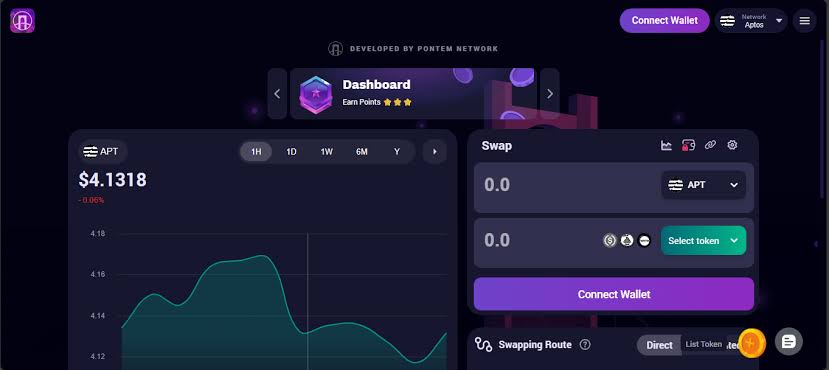
Swap App
How the on-chain swap interface works, what the fees really are, and how to read a route before you confirm.
Read the guide
Login & Registration
Connect a wallet the safe way, protect your seed phrase, and understand why there's no email-and-password here.
Read the guide
The Token
What the token is for, supply and utility, and the on-chain facts you should verify yourself before buying.
Read the guideCustodial vs non-custodial — on your fingers
The single most important distinction in crypto. Get this wrong and there's no support line that can reset your password.
Custodial (a CEX)
Like a bank. The exchange holds your keys. Lose your password? Reset it. Convenient — but you're trusting the platform with your funds, and KYC is mandatory.
Non-custodial (your wallet)
Your personal safe. You hold the seed phrase, you sign every transaction. Total control — but total responsibility. There is no “forgot password”.
DEX swap vs instant convert
Two ways to move between assets. Here's how they compare on the things that actually cost you money.
| Feature | On-chain DEX swap | Instant convert |
|---|---|---|
| Speed | ~1 second, on-chain | Near-instant |
| Best for | Aptos-native tokens | Cross-asset & first moves |
| Fees | Pool fee + tiny gas | Single spread, no gas |
| Wallet needed | Yes — non-custodial | Account-based |
| Network risk | You pick the chain | Handled for you |
| KYC | None | Usually required |
Figures are indicative and vary with network conditions. Fee and network data referenced from official Liquidswap and Aptos documentation — verify at the source before you trade.
Move funds in 4 steps — without burning them
The #1 way people lose money is a network mismatch. Follow this order and double-check before every confirm.
Pick source & asset
Decide what you're sending and confirm which network that token lives on right now.
Match the network
The receiving address must be on the exact same network. This is where most funds are lost.
Preview the route
Check the rate, spread and any network fee. If the numbers look off, stop and re-check.
Confirm & verify
Approve, then confirm the transaction landed on-chain with a block explorer before you relax.
Sending an ERC-20 token to a TRC-20 address (or vice-versa) will destroy your funds permanently. There is no undo and no refund. Confirm the sending and receiving networks are identical every single time — the ticker matching (“USDT to USDT”) is not enough.